Dental Implants in Vaughan and Maple

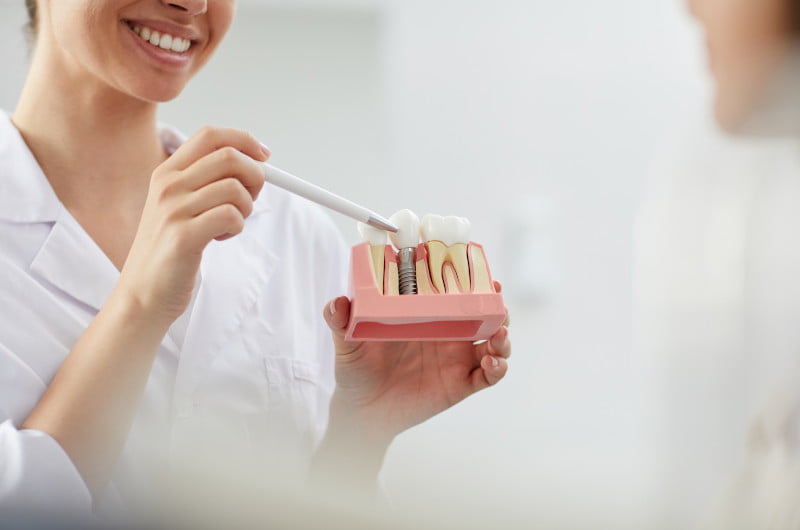
Mapleridge Smile Centre provides dental implants for patients across Vaughan, including Maple, Woodbridge and Concord, at our clinic at 10175 Keele Street in Maple. Whether you are missing a single tooth, several teeth or a full arch, our implant dentists plan every stage of treatment around your bone, your bite and your long-term oral health.
A dental implant is a small threaded post, usually made of titanium, that replaces the root of a missing tooth and supports a crown, a bridge or a full set of teeth. Over roughly three to nine months, the jawbone fuses to the implant, turning it into a stable foundation. With daily brushing, flossing and regular dental visits, an implant can last a lifetime.
What Is a Dental Implant?
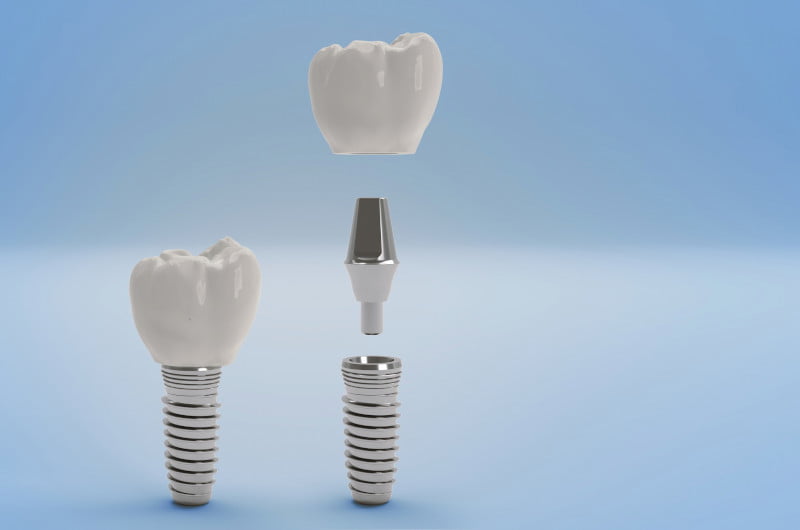
Unlike a bridge or a denture, a dental implant replaces a missing tooth from the root up. Once healed, it works much like a natural tooth when you chew, speak and smile. Every implant has three parts:
- Implant post: a threaded post placed in the jawbone that acts as an artificial tooth root.
- Abutment: a small connector that attaches to the post and sits just above the gum line.
- Restoration: the visible tooth, which can be a crown, an implant-supported bridge or an implant-supported denture.
Most implants are made of titanium, and some are ceramic. Both materials are biocompatible, which means they are well tolerated by the gums and bone in your mouth.

Types of Dental Implant Treatment at Mapleridge Smile Centre
The right type of implant treatment depends on how many teeth are missing, where they are located and how much healthy jawbone you have. During your consultation, our team explains which options suit your situation and why.
Single Tooth Implant
A single tooth implant replaces one missing tooth with one implant and one crown. Because it doesn't rely on neighbouring teeth for support, those teeth stay untouched. This makes it one of the most conservative ways to fill a gap in your smile.
Implant Supported Bridge
When three or more teeth are missing in a row, two or more implants can support a fixed bridge. The bridge anchors to the implants rather than your natural teeth, so no healthy teeth need to be reshaped.
Full Mouth Dental Implants
For patients who are missing most or all teeth in an arch, or whose remaining teeth are failing, several implants (usually four to six) can support a complete fixed arch. Mapleridge Smile Centre plans and places All-on-X full mouth dental implants for patients in Vaughan and Maple who want to replace removable dentures with teeth that stay in place.
Bone Grafting and Sinus Augmentation
An implant needs enough healthy bone to anchor securely. If bone has been lost after an extraction, gum disease or years of wearing dentures, a bone graft or sinus augmentation can rebuild the area before or during implant placement.

Benefits of Dental Implants
Tooth loss affects far more than appearance. It changes how you eat, how you speak and how your jaw ages over time. Dental implants are the closest replacement to natural teeth and offer several advantages:
- Better chewing ability
- Improved speech and clearer pronunciation
- A natural-looking, more confident smile
- Stability for loose or wobbly dentures
- Jawbone preservation, which helps prevent the sunken look that follows tooth loss
- Long-term durability with proper care
Who Is a Good Candidate for Dental Implants?
Most adults who are missing one or more teeth can be considered for dental implants. Your jaw must have finished growing, typically by age 18 or older, and there is no upper age limit. The most important requirement is enough healthy jawbone to support the implant.
Treatment may need to be delayed or adjusted if you have:
- Active or untreated gum disease
- Extensive tooth decay
- Severe bone loss in the jaw
- Unmanaged diabetes
- Certain bone disorders or autoimmune conditions
- A smoking or vaping habit, which can disrupt healing
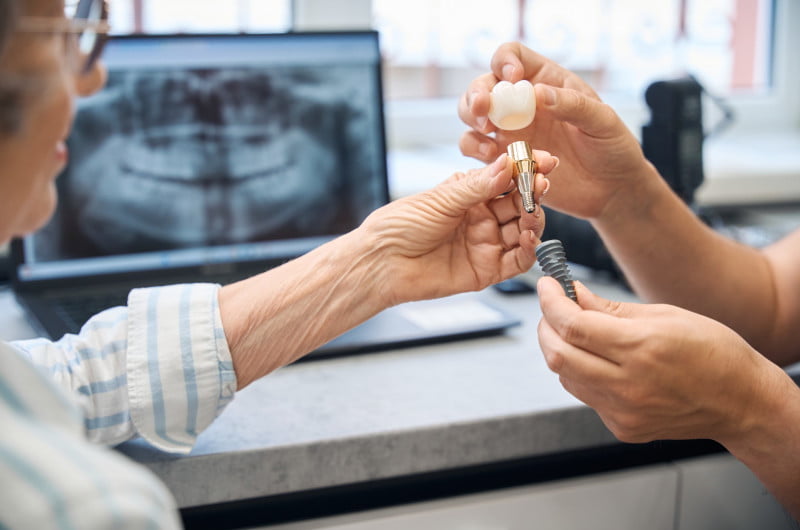
Many of these factors can be treated or managed first. At your consultation, a Mapleridge Smile Centre dentist reviews your medical history, examines your gums and takes digital X-rays before recommending treatment.
Dental Implants vs Bridges vs Dentures
Implants, bridges, and dentures all replace missing teeth, but they work differently and affect your mouth differently over time.
A dental implant replaces the tooth root, helps preserve the jawbone and leaves the neighbouring teeth untouched. The implant itself can last a lifetime, while the crown on top may eventually need replacement because of normal wear.
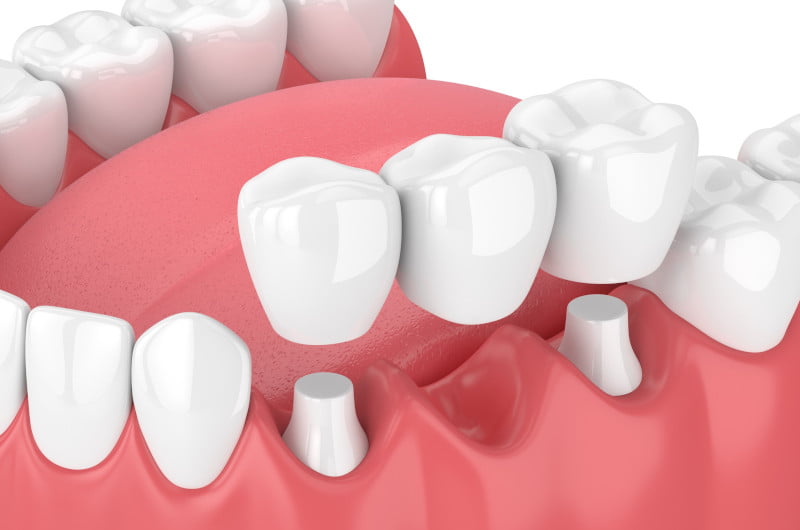
A tooth-supported bridge fills a gap by anchoring to the teeth on either side, which requires reshaping at least one healthy tooth on each side. Most crowns and bridges last around 15 years. If you are weighing both options, our team also provides dental bridges in Vaughan and can explain how each choice affects your bite and adjacent teeth.
Removable dentures rest on the gums and do not require surgery. Most dentures last at least seven years, but because they don't replace the tooth root, they don't prevent the jawbone from shrinking. You can also add implants to stabilize dentures that feel loose.
The Dental Implant Process, Step by Step
Getting a dental implant usually takes several appointments spread over a few months. Here is what to expect at Mapleridge Smile Centre:
Free consultation and exam
We assess your teeth, gums and bone with an oral exam and digital X-rays, then explain your options and prepare a treatment plan.
Preparation
If a damaged tooth needs to be removed or the bone needs rebuilding, we complete extraction or bone grafting first.
Implant placement
The implant is placed under local anesthetic, so you should not feel pain during the procedure. If the implant is near the front of your mouth, a temporary tooth can be made so there is no visible gap.
Healing (osseointegration)
Soft tissue healing takes about one week. Over the next three to nine months, the jawbone fuses to the implant.
Abutment and final restoration
Once healing is complete, we attach the abutment and your custom crown, bridge or denture. This visit usually takes about an hour and may involve a second minor procedure.
Follow-up and maintenance
Regular check-ups and professional cleanings help protect the implant and the surrounding gums.
If dental visits make you anxious, our sedation dentistry options range from laughing gas to sleep dentistry and can be combined with implant treatment so you stay relaxed throughout.
How Much Do Dental Implants Cost in Vaughan?

The cost of a dental implant in Vaughan depends on your individual treatment plan, so we provide your estimate after the consultation rather than quoting a single price. Two patients replacing the same tooth can need very different care, depending on the health of their bone and gums.
The main factors that affect tooth implant cost are:
- The number of teeth being replaced
- The type of restoration: a crown, an implant bridge or a full arch
- Whether extractions, bone grafting or sinus augmentation are needed
- Whether you choose sedation
Dental Financing for Implants
To make treatment more manageable, Mapleridge Smile Centre works with Beautifi to offer dental financing in Vaughan for implants and other procedures. The online application takes less than three minutes, doesn't affect your credit score, and considers all credit scores. Once you are approved, Beautifi pays the clinic directly, and you repay in monthly instalments.

Does Insurance or CDCP Cover Dental Implants?
Coverage for dental implants varies widely between private insurance plans. Some plans cover parts of treatment, such as an extraction or the final crown, while many do not cover the implant itself. Our team can help you review your benefits before treatment begins.
The Canadian Dental Care Plan (CDCP) lists implants and all implant-related procedures as exclusions. Some services that may come before an implant, such as a tooth extraction, may be eligible as oral surgery services.
Mapleridge Smile Centre follows the Ontario Dental Association (ODA) fee guide, not the reduced CDCP fee guide. CDCP patients pay their copay plus the difference between the CDCP reimbursement and the ODA rate. We bill CDCP directly through Sun Life.

Recovery and Aftercare
Most patients feel only mild discomfort and swelling after implant placement, which usually eases with over-the-counter pain relievers. The first stage of healing takes about a week, and most people feel like themselves again within that time. Full integration of the implant with the jawbone takes three to nine months, and our team monitors your progress along the way.
The implant itself cannot get a cavity, but the gums and bone around it can still develop disease. To protect your implant:
- Brush twice a day
- Floss or clean between teeth daily
- Keep up with regular exams and professional cleanings
- Avoid smoking, especially during healing
Contact Mapleridge Smile Centre right away if you notice a loose implant, bleeding or swollen gums, pus around the implant, a fever or swollen lymph nodes in your neck.
Why Choose Mapleridge Smile Centre for Dental Implants?
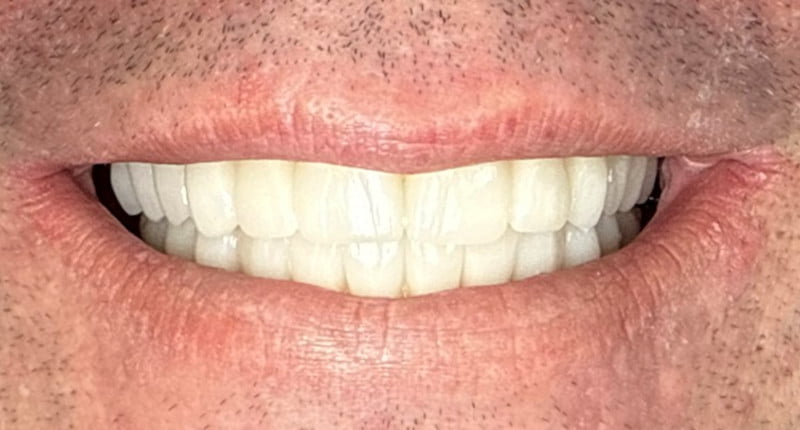
Patients across Vaughan, Maple, and Woodbridge choose Mapleridge Smile Centre for implant care that is carefully planned and clearly explained from the first visit.
- Advanced implant training. Our team includes Dr. Amir Guorgui, a Diplomate of the American Board of Oral Implantology, and Dr. Robert Eisen, who has over 35 years of experience in implant and full arch dentistry.
- Complete care in one clinic. We can complete the surgical and restorative stages of your implant treatment at our practice in Maple.
- Comfortable treatment. Sedation options range from laughing gas to sleep dentistry for anxious patients.
- Flexible payments. Financing through Beautifi helps spread the cost of treatment into monthly payments.
- Free consultations. Start with a free in-person or virtual consultation and get a clear treatment plan before you decide.
Frequently Asked Questions
You should not feel pain during placement because the area is numbed with local anesthetic, and sedation is available if you feel anxious. Mild discomfort and swelling afterwards are normal and usually ease with over-the-counter pain relievers. Most patients feel like themselves again within about a week.
With brushing, flossing and regular dental visits, the implant itself can often last a lifetime. The crown, bridge or denture attached to it may need replacement at some point because of normal wear.
The three main options are a single tooth implant with a crown, an implant-supported bridge that replaces three or more teeth, and a full arch of teeth supported by several implants.
No. CDCP lists implants and implant-related procedures as exclusions. Some related services, such as extractions, may be covered. Mapleridge Smile Centre follows the ODA fee guide, so CDCP patients pay their copay plus any fee difference.
Healing usually takes three to nine months before the final tooth is attached. If the implant is in a visible area, a temporary tooth can be placed so you are not left with a gap.
Often, yes. Bone grafting or sinus augmentation can rebuild the bone needed to support an implant. Your dentist will confirm this with an exam and X-rays.
For many patients, implants are worth considering because they help preserve the jawbone, leave neighbouring teeth untouched and usually last longer than bridges or dentures. Whether they are right for you depends on your health, your bone and your goals, which we review at a free consultation.
The cost depends on your individual treatment plan, including how many teeth are being replaced, the type of restoration and whether extractions, bone grafting or sedation are needed. At Mapleridge Smile Centre, we provide your estimate after a free consultation, once we have examined your teeth, gums and X-rays. Beautifi financing is available to help spread the cost into monthly payments.
It depends on your plan. Some private dental plans cover parts of implant treatment, such as the extraction or the final crown, while many do not cover the implant itself. Our team can help you review your benefits before treatment begins so you know what to expect.
Yes. Dental implants are a well-established treatment, and when an experienced dentist places them, the risk of complications is minimal. Titanium and ceramic implants are biocompatible, meaning the gums and bone tolerate them well. Your dentist will review your medical history before recommending treatment.
Implants are typically placed in patients aged 18 or older, once the jaw has finished growing. There is no upper age limit. The most important factor is having enough healthy jawbone to support the implant, which your dentist can assess with an exam and X-rays.